










Rust for beginners: starting, base building, and progression in 2026
Rust for beginners starts without hints: the character wakes up on the shore with a rock and a torch, while players are already running around, gathering resources, and building bases. The main mistake is trying to immediately replicate the actions of an experienced team. On the first wipe, it's more important to learn the sequence: set a respawn point, gather tools, choose a location, secure a small base, and only then risk the accumulated loot.
The first minutes after spawning
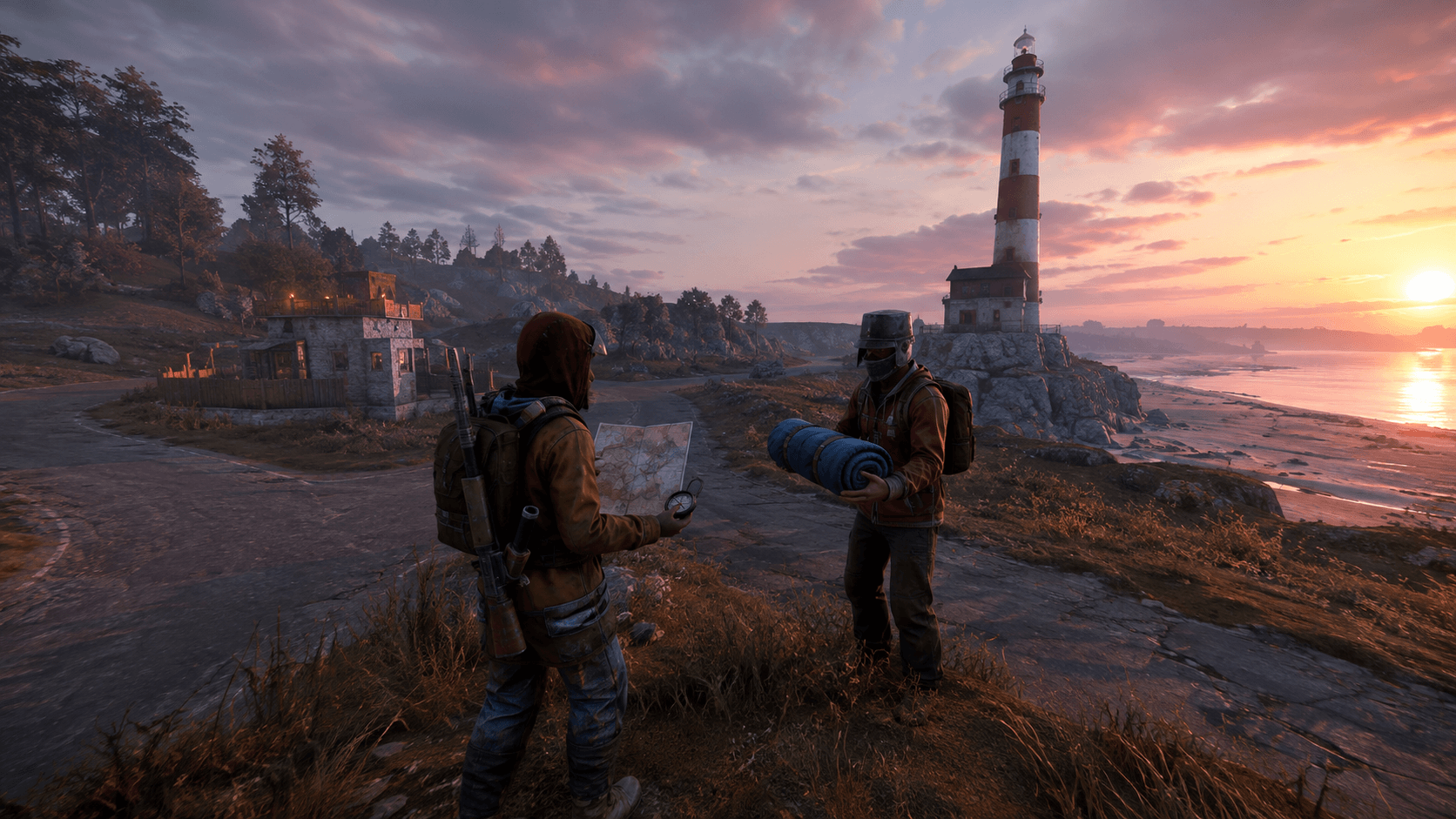
Immediately look around and open the map. The shore is convenient for orientation, but lingering there is dangerous: there are many fresh players and resources are often scarce. Mark the road, river, a small monument, and the presumed location for your base. Do not run through the center of the map with a full inventory — choose a short route and only gather what helps with the nearest task.
Use a rock to gather wood and stone. The red mark on a tree and the glowing point on ore indicate increased gathering, so move your strikes following the marker. Collect wood: cloth is needed for a bow, clothing, and a sleeping bag. Food from beach crates, mushrooms, and rivers will help you avoid losing health while searching for a location.
The first essential item is a sleeping bag. It creates a respawn point and shortens the path after death. Do not place it right next to the future door: enemies can camp both spots. It's useful to hide a second bag in bushes at a short distance. If one entrance is being watched, you'll have an alternative chance to return.
Which items to craft first
- Stone hatchet. Speeds up gathering wood, necessary for the building plan, hammer, doors, and crates.
- Stone pickaxe. Faster at gathering stone, metal, and sulfur. Stone and metal are priorities at the start.
- Hunting bow. Provides a chance to defend yourself, hunt, and control distance. Make a supply of arrows.
- Building plan and hammer. You can't place or upgrade a base without them.
- Wooden door with lock. Secure the entrance before placing crates and a furnace.
Do not craft everything in the menu in a row. Extra clothing, weapons, or tools turn resources into items that you can lose within a minute. Keep the goal in mind: get a working set, build a base, and leave a reserve for recovery after death.
Choosing a location for your first base
A good spot is between safety and access to resources. Near roads, there are many barrels and crates, near monuments — components and recyclers, in the forest it's easier to gather wood, and snowy mountains are rich in ore. However, the most obvious spot attracts neighbors. Consider not only resources but also the routes of other players.
- Do not build a base in a valley fully visible from cliffs.
- Avoid narrow passages between large bases.
- Check if you can expand the foundation and place external bags.
- Leave a short path to the recycler, but do not live right at the entrance to a monument.
- Consider the server format and wipe schedule in the wipe calendar.
For a beginner, a small base in a peaceful area is more useful than a perfect rock near the richest monument. On our Rust servers, choose a spot considering the online population, resource multiplier, and wipe length.
Reliable starter base
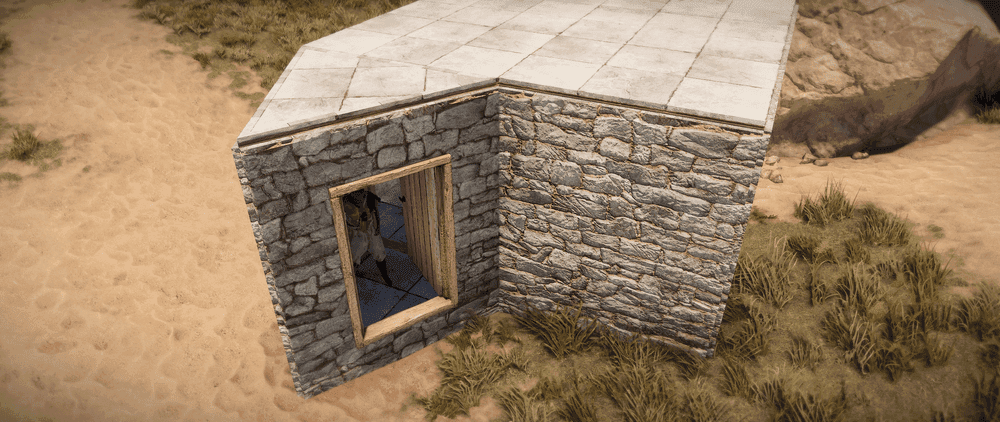
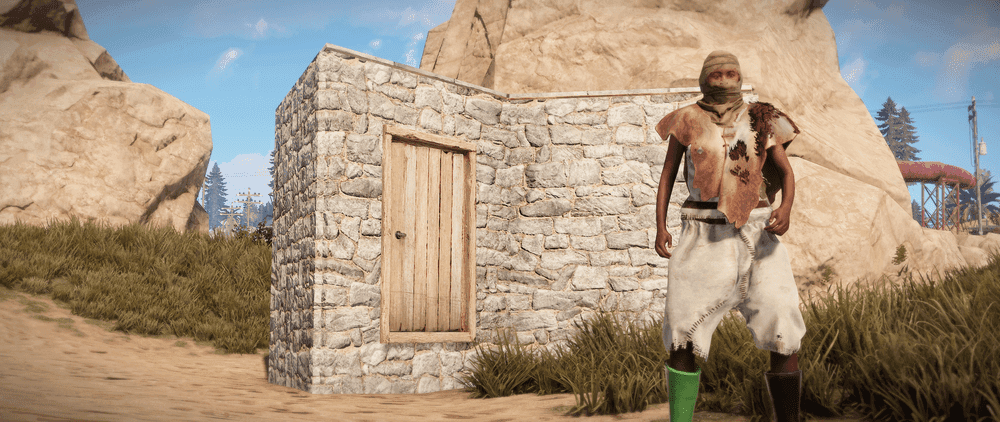
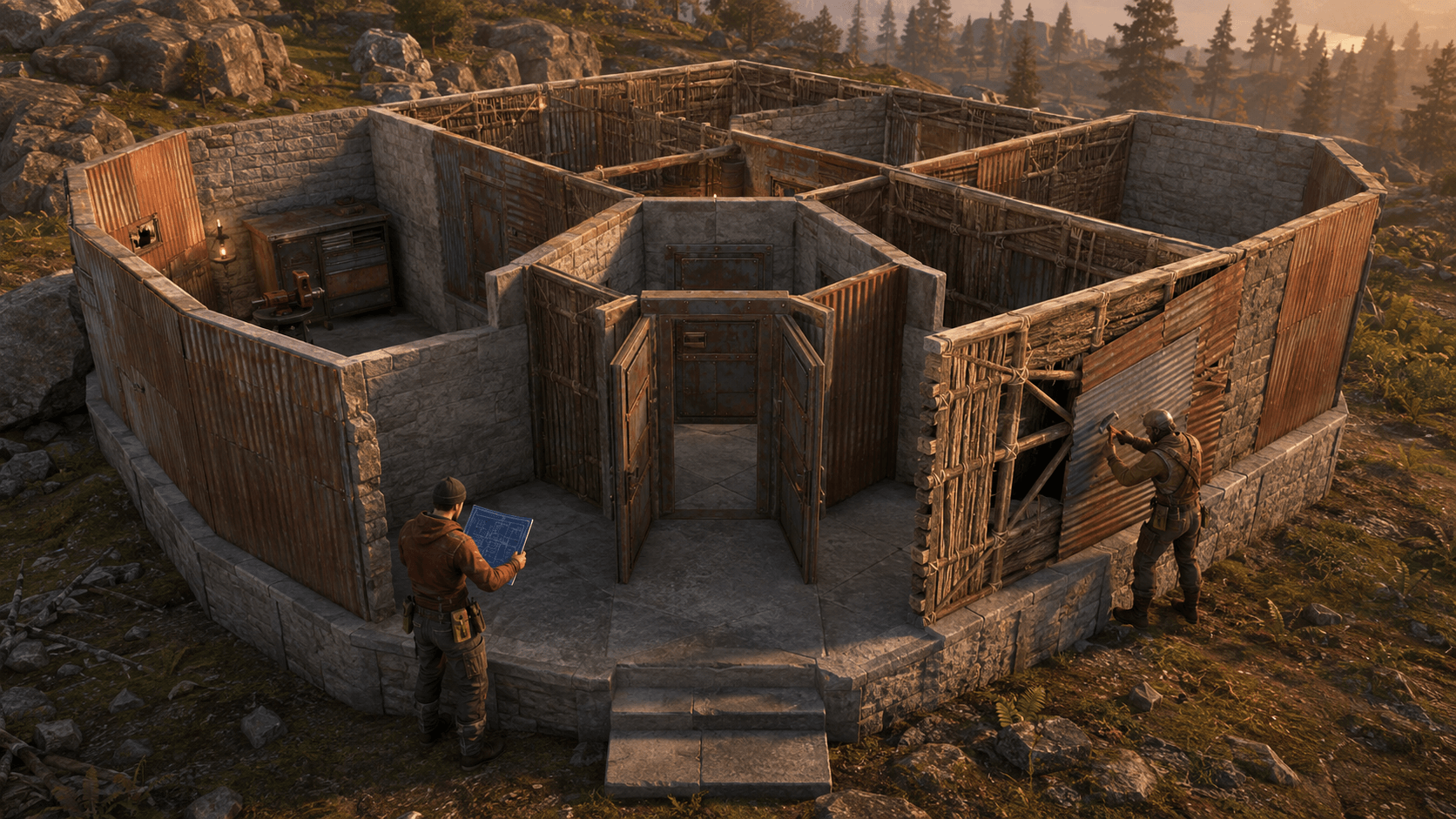
The simplest option is a 2x1 base with a triangular airlock. First, place a foundation, walls, doorways, and ceiling out of branches, then immediately upgrade everything with a hammer to at least wood, preferably stone. The soft side of the wall should face inward. On stone, it has a smoother surface; the outer side looks rougher.
The airlock consists of two doors positioned so that the open inner door blocks an opponent from passing further. Even if you are killed at the door, the enemy should not gain direct access to the room. Start with wooden doors, but replace them with sheet metal ones as soon as possible.
Inside, place a cupboard with tools, a sleeping bag, small crates, and a furnace. Do not block the passage with items and leave space for a workbench in advance. The cupboard should be locked and filled with resources for upkeep. Check the decay timer every time you return.
Locks, doors, and team access
A key lock suits a solo player: the creator does not need to carry a key. Do not create a key unnecessarily — a character who loses it can give access to an enemy. A team finds a code lock more convenient. Use separate codes for the external door, inner core, and auxiliary rooms if the base is already valuable.
Never share a code with a random ally. In Rust, trust is a resource, and changing locks after betrayal is more costly than being cautious. Authorize only permanent members in the cupboard. If a player leaves the group, clear access to the cupboard, turrets, and electrical devices, then change the codes.
Furnace, metal, and first workbench
The furnace turns metal ore into metal fragments, sulfur ore into sulfur, and wood gradually into charcoal. Metal is needed for doors, code locks, weapons, and various devices. Sulfur will be useful later, so do not carry it on risky trips without a reason. Divide ore and fuel between slots so the furnace works evenly.
The first-level workbench opens an early stage of development. Scrap is spent on the tech tree, research, and purchases, so do not spend it impulsively. First, determine what your strategy specifically lacks: weapons, medical items, building materials, or electricity. Detailed resource storage order is explained in a guide on components and recycling.
Roads, monuments, and recycling
Barrels and roadside crates provide scrap, components, and sometimes ready items. Do not break every barrel if your inventory is already filled with cheap items. Learn to quickly assess your find: weapon bodies, springs, pipes, gears, and tech trash are important for development; some common components are better recycled.
For initial trips, small monuments with clear exits are suitable. Before entering, hide a bag and a basic kit nearby. Listen for shots and a working recycler. Start recycling in small batches, take a position with a view, and know the retreat path in advance. Access routes can be learned from guides on green keycards and blue keycards.
Food, water, and healing
Hunger and dehydration rarely kill instantly but reduce your health reserve and hinder surviving a fight. Fruits grow near rivers, mushrooms are found in the forest, and animals can be butchered. Do not eat spoiled food unless absolutely necessary. Cook meat on a campfire and make sure it does not burn.
Simple bandages stop bleeding. Medical syringes act faster but require research and resources. Keep healing items on the quick access bar, not deep in your inventory. Before heading out, restore health and comfort by the campfire. Berry effects and enhancements for longer trips are described in a guide on the mixing table.
Dealing with encounters with players
Not every contact has to end in combat. Use your voice, do not approach too closely, and do not draw your weapon unnecessarily. At the same time, do not show valuable inventory and do not lead a stranger to your actual base. If the opponent is better armed, relief and distance are more important than bravery: break the line of sight, move unpredictably, and retreat to cover.
After a successful loot run, do not continue the route out of greed. Return, unload, and go out again. Divide valuable items between crates. Leave a supply of bows, clothing, food, and tools for the next outing. A player who can quickly recover after death develops more steadily than one who starts from scratch every time.
Development plan for the first gaming evening
| Stage | Main goal | What to keep |
|---|---|---|
| First 15 minutes | Bag, tools, bow | Cloth, wood, stone |
| Before the first hour | Stone base and metal | Scrap, ore, components |
| After fortification | Workbench and loot routes | Bodies, springs, pipes |
| Next stage | Access cards and upgrades | Weapons, medicine, fuel |
If you find a car, do not try to repair it on an open road with a full inventory. First, prepare a garage and parts following a guide on modular cars. Any new direction should strengthen the basic economy, not deplete the last resources.

Common mistakes of beginners
- Building without a lock. Close the door immediately after installation.
- Too large of a base. An empty palace decays and attracts raiders.
- One sleeping bag. Create backup points but consider the shared timer of nearby bags.
- All loot in one crate. Divide resources and keep a separate recovery set.
- Wrong side of the wall. Check the orientation before the rotation time ends.
- Greed at the recycler. Several safe trips are better than one huge loss.
- Ignoring sounds. Steps, doors, vehicles, and shots warn of danger in advance.
Solo, duo, and team play
A solo player wins through stealth and short cycles. Build compactly, do not turn on all furnaces at once, and transport loot in small batches. Several external bags, caches with cheap tools, and different exits help recover after an attack. Do not try to defend an open position against a large group just because there is one bag of resources nearby.
In a duo, divide responsibilities in advance: while one gathers wood and stone, the other collects cloth, components, and food. Return together if carrying a rare find. In a large group, order is needed: label crates, establish a common code, do not take the last tools, and report spent components. Numerical strength does not fix chaos inside the base.
Choose the scale of your goal according to the team size. Solo quickly pays off a small farm and a local route, while a group has access to complex monuments, transport, and defense. However, each participant needs a personal recovery kit. If all weapons are with one deceased player, the numerical advantage disappears.
What to do after failure
After death, do not run to your body the same way. Assess the bag timer, the opponent's armament, and the likelihood that they are waiting for your return. Sometimes it is better to put on a spare set, bypass the position, and observe. If the loot is already lost, switch to a short task: gather wood, repair a door, or prepare a new bow.
After a raid, first restore the respawn point, cupboard, and closed compartment. Do not immediately start building the previous large base. Save what remains, change the codes, and check neighboring privileges. A useful habit is to end the evening so that in the morning, the base still has tools, clothing, and resources for a full attempt.
The main principle of a good start
A successful start in Rust is not a rare find but a chain of small secure achievements. Placed a bag — got a second chance. Closed a stone base — kept the tools. Recycled components — brought the workbench closer. Learned a route — reduced the risk of the next outing.
Do not fear death: loss is part of the game and a source of experience. Analyze why you were noticed, where there was no cover, and which item should not have been taken. After several such cycles, the map will no longer seem chaotic, and the first hour after a wipe will turn into a clear action plan.
Latest comments