










Frequently Asked Questions about Rust: Answers for Beginners 2026
Frequently Asked Questions about Rust usually arise even before the first base: which server to choose, when the wipe occurs, why the house disappeared, and what is saved after death. This guide provides short answers and then explains the game's logic. It is designed for beginners, returning players, and those planning to start a new season on the SIMPLE RUST servers.
What to buy and install for the game
For the official PC version, you need a Rust license on Steam and 64-bit Windows. After installing, Steam downloads the client, and updates are applied automatically. Do not download "ready-made assemblies" and suspicious launchers: besides the risk to your account, their version may not match the server. Before the first session, check the free space on your SSD, update your graphics card driver, and allow Easy Anti-Cheat to run with the game.
Rust is demanding on storage and memory, so an SSD not only affects the first launch but also the connection to the server. If the loading hangs, first check the file integrity in Steam, close unnecessary programs, and restart the client. Reinstallation is the last step, not the first.
How to choose a Rust server
Look at the online player count, group limit, wipe frequency, resource gathering speed, and set of modifications. High online gives more encounters and competition, but it's harder for a beginner to settle peacefully. x2 or x3 servers speed up recovery and are suitable for players with limited time. Vanilla uses the basic game balance and requires careful resource management.
On the SIMPLE RUST server page, you can choose a mode for your team. Before connecting, read the rules: restrictions on group size, alliances, building, and chat behavior differ. Ignoring the rules is not considered a gameplay error and can result in a ban.
What is a wipe and when does it occur
A wipe clears the map and buildings, after which everyone starts anew. A forced global wipe updates the world on all Rust servers; the schedule of specific intermediate wipes is determined by the project. In some modes, researched blueprints are wiped separately, while in others, they are retained. Therefore, the terms "map wipe" and "BP wipe" cannot be considered synonymous.
Check the current date in our Rust wipe calendar. On the start day, update the game in advance, prepare a route, and connect on time. Old schedules from search results quickly become outdated.
What to do in the first ten minutes
Gather cloth, wood, and stone; craft a sleeping bag, basic tools, and weapons. Open the map, mark the road, a small monument, and the presumed base location. Do not linger on the beach: new players spawn there, and chaotic fights often occur.
The sequence of actions is more important than the amount of loot. One closed square with a door, lock, and cupboard is more useful than a full inventory lost along the way. A detailed sequence is available in the Rust beginner guide.
Why do houses decay on their own
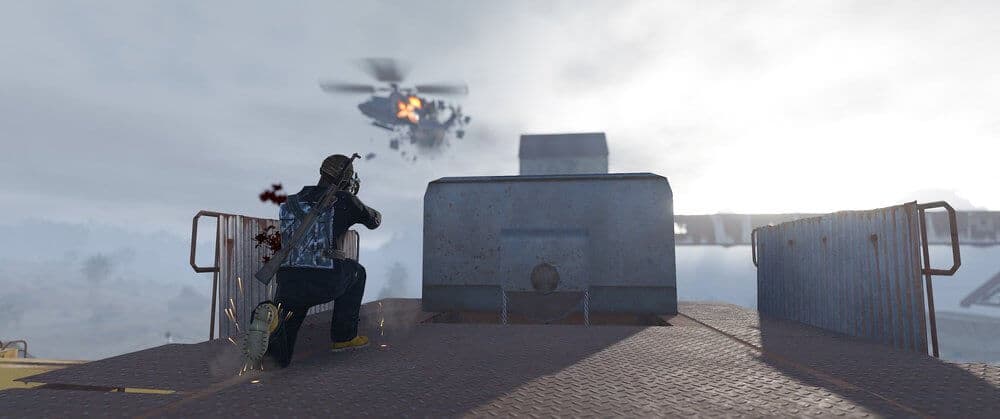
Buildings require maintenance. Set up a cupboard with tools, authorize yourself in it, and place the specified resources inside. The interface shows the time supply. If materials are insufficient, elements of the house gradually lose durability. The larger the base and the higher the level of its parts, the more expensive the maintenance.
The cupboard also restricts building in its area. Protect it with doors and do not leave it in a passageway room. After expansion, check the cost again: adding a new floor or external wall changes the expenditure.
Why use an airlock and what doors to use
An airlock is a small entrance with two doors that cannot be used simultaneously to enter directly. It prevents an opponent from rushing in when the owner opens the outer door. Position the door leaves so that one blocks the path when the other is opened.
A wooden door is suitable only for the first few minutes. Quickly replace it with a metal one. For solo play, a code or key lock is convenient depending on the risk, while a team finds it easier to use a code lock. Never enter a shared code near a stranger, and change it after excluding a team member.
Why you can't build or upgrade
Most often the reason is lack of authorization in the cupboard, insufficient resources, incorrect side of the wall, or intersection with a world object. Check the message in the center of the screen. The blue side of the wall should face inward, and the external texture should face outward. During a short period after placement, you can rotate some items with a hammer; later, errors will require destruction or rebuilding.
You cannot place a foundation on too steep a surface or cover certain monument points. First, create a minimal frame, check the entrance and space for the cupboard, and only then invest in upgrades.
What is saved after death
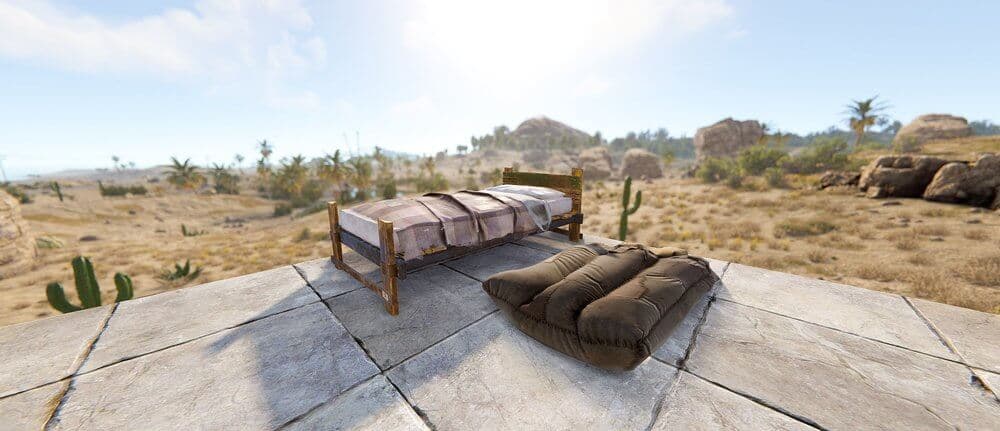
Inventory remains in the world on the body or backpack and can be picked up by another player. Researched blueprints are usually saved until the corresponding BP wipe, and respawn points continue to work if not destroyed. Houses, boxes, and authorization do not disappear due to a character's death.
Therefore, keep spare gear, clothing, food, and tools in your base. It's worth returning for your body only when the chance outweighs the risk. If an enemy is camping the area, it's better to restore your gear and change your route than to gift them new resources multiple times.
What to store and what to recycle
Components are needed for weapons, doors, workbenches, electricity, and transportation. At the start, leave metal pipes, springs, gears, bodies, and technical parts for the nearest goal. Recycle excess in batches, but don't stand at the recycler with a full inventory without scouting.
A practical priority table is found in the guide on components and recycling. First, make a list of future crafts, then break down the remainder: this way, you won't destroy a rare part that you'll need to find again in a minute.
How blueprints and workbenches work
A blueprint unlocks a permanent recipe within the current BP cycle. Some basic items are known immediately, while others are learned through the research table or tech tree. Workbenches are divided into levels and grant access to more complex items. Research requires a hammer, so it's not beneficial to haphazardly spend it on every found item.
Define your role: builder, farmer, electrician, or fighter. A team can distribute branches and acquire the necessary set faster. For a solo player, it's better to first unlock a stable recovery kit and leave expensive situational items for the mid-wipe period.
What type of weapon to choose for a beginner
The best weapon is one that suits the distance and that you can replace. The bow and crossbow teach positioning. The Eoka, water pipe, and double-barrel are dangerous up close but require ambush. The revolver provides a cheap firearm set, pistols are convenient at close and medium range, and the semi-automatic rifle helps control open areas.
Do not carry your only good weapon without armor, healing, and an escape plan. Compare classes, ammo, and modules in the full Rust weapons guide.
How to lose less in firefights
Sound, cover, and the first accurate shot are more important than fancy gear. Stop before entering an open area, listen for footsteps, and check your route back. Do not repeat the same angle after being hit. Use terrain, walls, and darkness, carry bandages separately from main healing items.
After a fight, do not loot instantly. Reload, heal, and check for possible enemy positions. Combatlog helps understand hit results; safe commands and binds are compiled in the Rust console guide.
How to increase FPS without questionable files
Lower shadow quality, draw distance, and the number of decorative details, close browsers and overlays, check component temperatures. Choose a server with an acceptable ping. Do not insert unknown configs and commands from videos: some parameters are outdated, and aggressive settings can worsen visibility or cause instability.
Change one parameter at a time and test in the same location. Save a working configuration with the command writecfg. If the issue arises after a patch, first read the official fixes: developers regularly change performance and graphics.
Can you play in third person
A regular player on a standard server plays in first person. Camera modes, teleportation, flight, and entity control belong to administrative or special tools. A command from a random guide does not grant permissions: the server checks authorizations.
Do not confuse client settings with server commands. A safe movement bind is available to the player, but noclip is not. This difference is especially important when transferring a list of commands from a test or personal server.
How to know if the advice is still relevant
Rust receives regular patches, so old numbers, recipes, and routes change. Check the publication date and verify the mechanics in the current game version. Videos are useful for visual routes, but do not guarantee the current cost, radiation, or item locations.
We compile verification methods in the article where to track Rust updates. If the information affects the entire start, check it before the wipe, not after losing your gear.
Main mistakes of a new player
- Carrying all resources with you and rarely depositing;
- Building a large wooden base without a cupboard and airlock;
- Trusting a stranger with a door code or exact stash location;
- Researching items without a plan and spending all scrap;
- Returning via the same route after each death;
- Ignoring rules, schedules, and server specifics.
Rust rewards not error-free play but the ability to recover quickly. Keep a spare kit, several sleeping bags, and a clear immediate goal. Then death becomes a time cost, not the end of the wipe.
Before your first serious session, give yourself a learning hour. Build a small house, find a recycler, explore a monument, prepare food, and intentionally gather a spare kit. Do not measure success solely by the number of kills. If you've learned to return home, close doors properly, allocate resources, and understand the cause of death, your next start will already be noticeably stronger.
Keep your own notes about the server: neighbors' activity times, safe roads, shop prices, and common ambush spots. The map changes after a wipe, but the habit of observing remains. Ask specific questions like "where to get a component" or "why is there a power shortage," and verify the answer in the current game version. This way, the vast Rust gradually transforms into a comprehensible decision-making system.
Latest comments