Modular Vehicles in Rust: Details and Best Builds
Modular Vehicles in Rust are customizable transport that can be turned into a fast two-seater car, armored van, mobile spawn point, truck, or tanker. To get started, it's not enough to find chassis by the road: the car needs to be repaired, a full set of engine components installed, refueled with low-grade fuel, and the modules chosen correctly.
Where to Find a Car
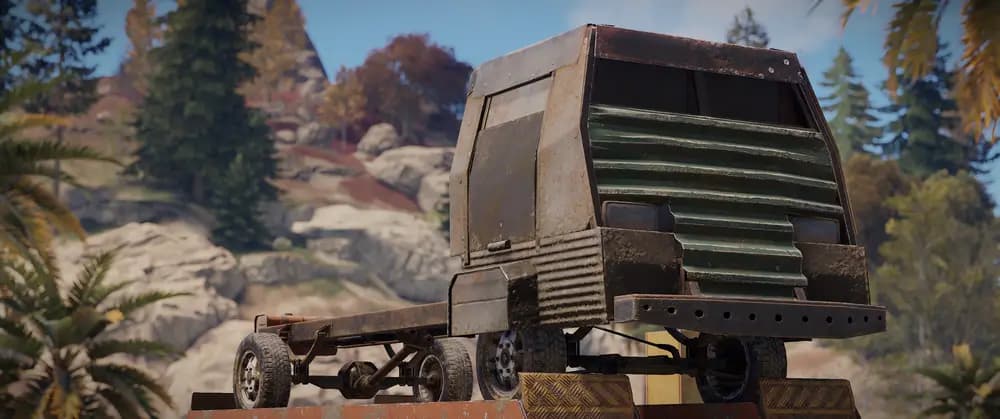
Damaged modular vehicles appear near roads. They already have a random set of body sections, but are usually not ready to drive: chassis and modules have reduced health, engine lacks parts, and the fuel tank is empty. When scouting the road network, bring a hammer, metal, wood, high-quality metal, and at least basic spare parts.
Assess the car before repair. The longer the chassis, the more useful sections it can accommodate, but a heavy body accelerates slower and requires a more powerful engine. For solo play, a short car is often more advantageous, while a three- or four-slot platform is more useful for a group.
Preparing the Car for Launch
- Check the health. Repair the chassis and each installed module with a hammer. Resources depend on the section: typically wood, metal fragments, and high-quality metal are used.
- Open the engine. Access is in the engine section or in the combined cabin with the engine.
- Install five types of components. You need a carburetor, crankshaft, pistons, spark plugs, and valves.
- Fill up with fuel. Modular vehicles use low-grade fuel.
- Take the driver's seat. If the car doesn't start, check the engine components, module condition, and fuel supply.
One item of each type is the minimum set. In a large engine module, some positions have additional slots, so installing more quality components increases overall performance. Mixing levels is allowed: for example, you can install four good parts and one low-quality carburetor just to get off the road.

Engine Component Quality
| Level | Features | When to Use |
|---|---|---|
| Low | Easier to find, weak speed and fuel efficiency | To retrieve a car from the road |
| Medium | Balanced power and fuel consumption | Everyday trips |
| High | Best engine performance | Heavy builds and long routes |
High-level full sets should be preserved. If the car is stored outside or used in a dangerous area, losing good components may be more costly than body modules. For the first trip, it's wise to use a cheap set, reach a secure garage, and then upgrade the engine there.
Car Lift
The lift allows you to remove and rearrange modules, repair the car, and install a lock. For crafting, you need 200 metal fragments, 5 units of high-quality metal, and one gear; a level 2 workbench is required. The device consumes 5 units of electricity, so it's convenient to connect it to a small battery via a switch.
Place the lift on a level surface inside a sufficiently high garage. Leave a straight approach and space around the platform. The car won't be able to leave the lift properly without a driver's seat and a working engine. Before rebuilding, unload valuable items: a mistake in layout can make access to the trunk or engine inconvenient.
With the Power Trip update, there is another option: the Oxum gas station garage gets a working lift when the island power grid is powered or a backup generator is running. This helps service a found car without a home station, but a public area attracts rivals. Your own garage is still safer.
Chassis Sizes
- Two slots. Compact, light, and convenient car for one or two players. Great for scouting and quick trips.
- Three slots. A versatile option. You can combine a cabin, separate engine, and storage or install a two-slot passenger block.
- Four slots. Foundation for heavy transport: armored group, camper, large cargo, or special tanker.
Some sections take up one slot, others take up two. First determine the task, then choose the chassis. Trying to make the fastest, most protected, and spacious car at the same time leads to a heavy vehicle with poor balance.
Main Modules
| Module | Slots | Purpose |
|---|---|---|
| Regular Cabin | 1 | Driver and passenger |
| Cabin with Engine | 1 | Compact cabin and small engine |
| Armored Cabin | 1 | Driver and passenger protection |
| Big Engine | 1 | Increased power for heavy builds |
| Rear Seats | 1 | Two additional passengers |
| Trunk | 1 | Resource and component transport |
| Flatbed | 1 or 2 | Open player transport |
| Passenger Cabin | 2 | Many seating places |
| Armored Cabin | 1 | Protected passengers |
| Camper | 2 | Beds, cupboard, barbecue, and storage |
| Taxi | 1 | Passengers and additional storage |
| Fuel/Water Tank | 2 | Liquid transport |
| Tanker | special | Collecting and delivering crude oil in current events |
A camper is useful for a group because it creates mobile spawn points, but beds inside cannot be considered a replacement for a secure base. If the transport is destroyed or stolen, the team loses both the vehicle and a convenient position. Do not store all combat gear in the camper.
Lock and Security
The lock is installed through the lift interface and protects doors, engine compartment, and storage. After installation, use keys carefully: a character with the matching key gains access to the car, so a lost set poses a risk. Do not carry the only spare key on the same trip.
The lock does not make the car invulnerable. Attackers can damage the cabin, push the transport, block the path, or destroy sections. Build a garage with wide gates, an airlock, and space for repairs. Ideally, do not leave the car visible from the road.
Control and Repair on the Go
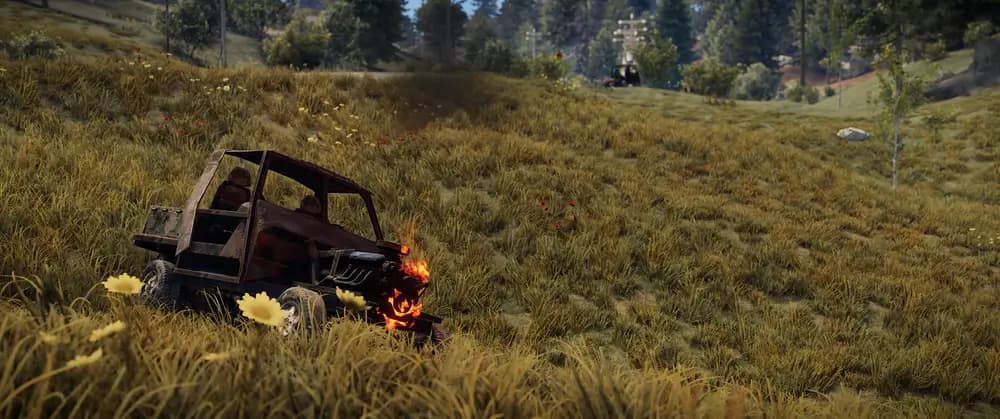
Driving uses standard movement keys. Exiting is done with a separate embark/disembark key; it's safer to stop before getting out. Cars handle better on roads, while rocks, steep slopes, and forests quickly reduce speed and damage modules. If the car flips, it can be pushed, but doing so under fire is extremely dangerous.
Carry a small repair kit: hammer, metal, wood, and spare fuel. Monitor not only the overall condition but also individual sections. Completely destroyed modules alter handling and can provide access to passengers or contents. If the health of all modules drops to zero, the car turns into unusable wreckage.
Best Builds
Fast Solo Car
Two-slot chassis, cabin with engine, and trunk. The build is compact, requires fewer components, and allows for component extraction. Do not overload it with expensive loot if the route passes through popular monuments.
Farm Vehicle
Cabin, separate powerful engine, and storage on a three-slot chassis. Before the trip, drink the appropriate beverage from the mixing table guide. One player gathers resources, the other controls the road and the car.
Armored Group Transport
Large chassis, armored cabin, engine, and protected passenger section. Such a car is heavy, so good components are especially important. Windows provide cover, but visibility is limited; the driver must know the route and turnaround spots in advance.
Mobile Base
Cabin with engine plus camper on a three-slot chassis - a practical minimum. On four slots, you can add storage or a separate engine. Place spawn points before battle, distribute keys, and always leave the main set of items at the base.
Considerations on Wipe Day
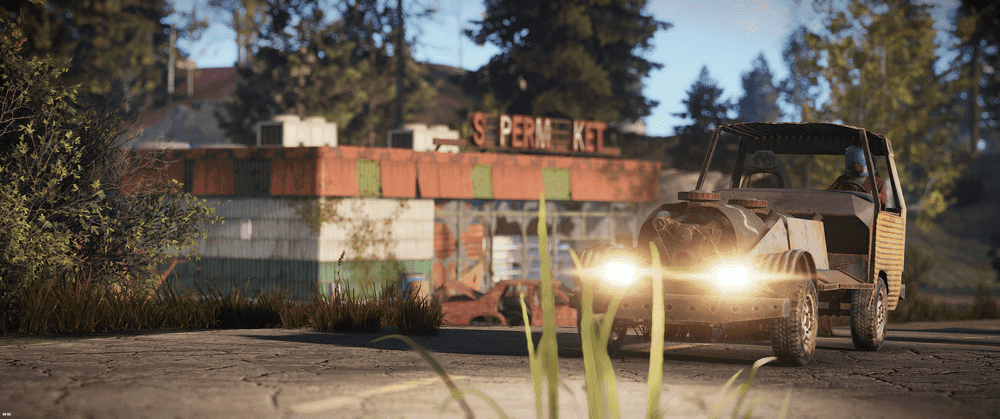
In the first hours after a wipe, cars near roads are quickly dismantled, and parts are especially valued. If you find a suitable chassis, first deliver it to shelter, then assemble the perfect configuration. Check the Prostoj server list: progression speed and resource availability depend on the chosen mode.
A car nicely connects the monument chain. Start with rooms opened by the green card, then move on to blue doors, and finish with red puzzles. Store spare fuses and protective gear in the trunk, but do not leave them there after returning.
Common Mistakes
- Repairing a random car without checking the chassis size and future build.
- Installing four types of engine components and forgetting the fifth.
- Using the best components before building a closed garage.
- Placing the lift without a level approach or sufficient height.
- Exiting the car at speed and leaving it to roll.
- Driving off-road where a safe road would take less time.
- Keeping the only key and all valuable loot with the driver.
Conclusion: the best modular vehicle is not the biggest, but the one that solves a clear task. Assemble a cheap full engine, deliver the chassis to the garage, install a lock, and only then invest in high-level components. For solo play, two slots are enough, three are suitable for a versatile group, and heavy armored and special builds shine on a four-slot platform.
FAQs
Why won't the car start?
Open the engine compartment and check the five mandatory types of components: carburetor, crankshaft, pistons, spark plugs, and valves. Then make sure there is low-grade fuel in the tank, the engine and cabin are not destroyed, and the driver's seat is installed. Component quality affects performance, but for the initial start, even a full set of low-level components will do.
Can you remove a module without a lift?
A lift is needed for standard car rebuilding. It opens the configuration interface where sections are removed, installed, and swapped. On the road, limit yourself to repairs and delivering found chassis, and perform complex assembly in a closed garage.
Which engine is best for a heavy car?
A separate large engine copes better with massive passenger and armored builds, especially with high-quality components. A compact cabin with an engine saves a slot and is good for a light car. If a four-slot car accelerates slowly, first upgrade the full set of parts, then assess if all body sections are really needed.
Can you steal a locked car?
The lock blocks regular access but does not protect the transport from damage, pushing, or organized theft. Do not leave the car by the road or external base wall. Place it in a closed garage, remove expensive components during long absences, and store spare keys separately.
Where to get car components?
Low-level components are found in road loot and small objects. Higher quality ones can be bought, found in suitable containers, researched, or crafted after progression. After the Power Trip update, the working garage at the Gas Station has access to an area with a chance of higher-quality components, but access depends on the facility's power supply.
How to reduce fuel consumption?
Use a higher quality engine set, avoid excess weight, and primarily plan the route on roads. Frequent collisions and attempts to navigate rocks not only slow down the trip but also consume resources for repairs. Turn off the engine during long stops and do not carry an extra heavy module without a task.
Will the car disappear near the base?
Abandoned transport gradually deteriorates. Indoors, the process is usually slower, but a garage does not negate the need to monitor the condition. Check the car after a break, repair modules, and do not expect a rare car to stand outside indefinitely. On a specific modified server, the decay rate may be altered.
On modified servers, the cost of components, module availability, and car storage rules may vary.