










Components in Rust: what to keep and recycle
Components in Rust determine the progression speed as much as ore and scrap metal. Gears turn into garage doors and mechanisms, pipes are needed for weapons and rockets, springs for advanced firearms, and tech trash for electronics and explosives. The problem for a newcomer is not finding components but in making the right decision: to keep, recycle, sell, or spend them now.
Where Components Appear
The main early source is barrels and crates along roads. The more dangerous the area and the higher the container level, the more valuable the potential loot. Weapon bodies and tech trash are often associated with military, elite, and locked crates, while rope, metal blades, and propane tanks are regularly found on simple routes.
Sea debris, underwater crates, tunnels, and monuments provide alternative routes. Choose not the richest path on the map but the one you can repeat. Three calm cycles with a return home bring more than one overloaded run through a popular monument.
Before heading out, leave space in your inventory and determine a recycling point. Routes through accessible rooms are covered in guides on the green card and blue card.
What the Recycler Does
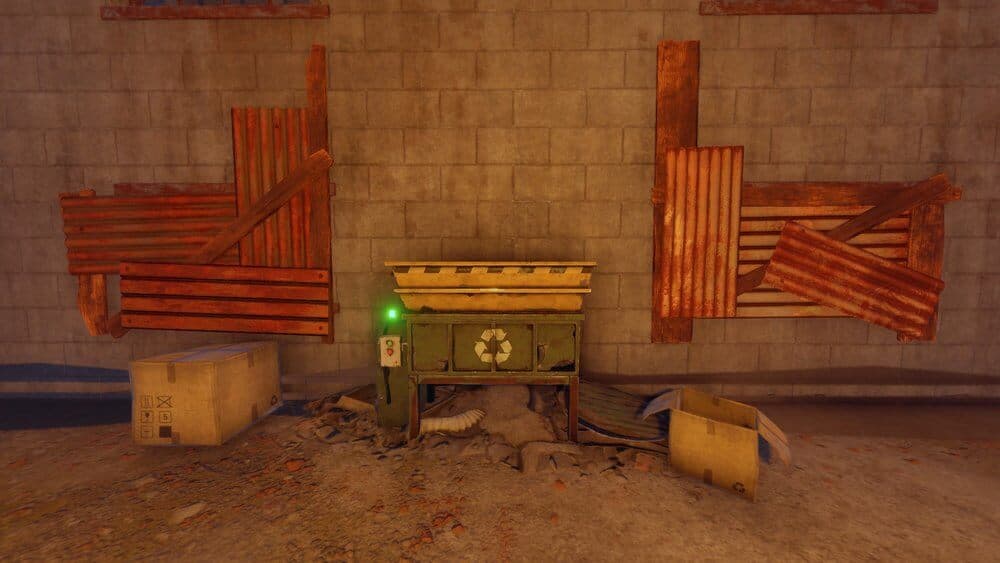
A regular recycler at a monument returns 60% of the recyclable value and processes an item in about five seconds. The safe option in protected areas gives about 40% and works slower — about eight seconds per cycle. The difference is a trade-off for reducing risk, so it's more profitable to recycle a large batch in a regular location if you can control it.
Place items in the input slots and start the device. The result appears on the other side of the interface. Do not fill the recycler with your entire inventory until you have assessed the situation. Divide the loot into batches: even if you are attacked, part of it will already be in your bag or with a teammate.
The condition of some recyclable items affects the return. Components usually give a predictable result, but the balance changes periodically. Before recycling a rare find, hover over it and check the current output in the interface.
Value Depends on the Goal
The same gear has different values for different players. For a solo player with a wooden door, it brings the garage door closer. A team with a full box of gears sees it as extra scrap metal. A farmer needs tarps and electrical components, a car group needs lift components and modules, raiders need pipes, springs, and tech trash.
Create a separate box and store a supply for the nearest two projects in it. Sort the rest by categories. This approach frees up space and prevents you from having to recycle a needed detail a minute before crafting.
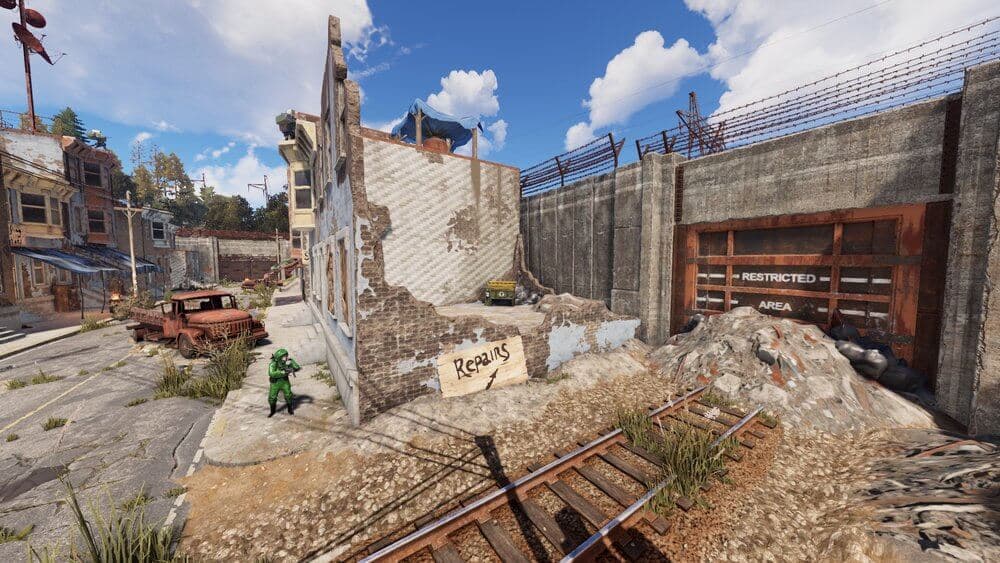
Essential Components
| Component | Why It's Important | Early Solution |
|---|---|---|
| Gears | Doors, gates, traps, transport, and trading | Keep a few |
| Metal Pipes | Weapons, rockets, and mechanisms | Store for chosen branch |
| Metal Springs | Most advanced types of weapons | Recycle sparingly early on |
| Semi-Automatic Body | Semi-automatic pistols and rifles | Keep for initial firearms |
| Rope | Bows, ladders, armor, and early items | Maintain a working supply |
| Sewing Kit | Clothing, armor, beds | Save for protection |
| Tech Trash | Electronics, C4, and complex devices | Store as a rare resource |
This priority changes after achieving the goal. Once the doors are installed, the weapon supply is created, and the electrical system is ready, extra components turn into scrap for studying the next level.
Gears, Pipes, and Springs
Gears are needed for construction and infrastructure: garage doors, external gates, traps, vending machines, lifts, and wind turbines. Do not recycle the last stack if you plan to expand. The current game also allows you to craft some components at a high workbench, but such crafting requires a significant amount of scrap and materials, so findings still save time.
Metal Pipes link weapon and raid development. They are used in firearms, flamethrowers, rocket launchers, and ammo. A team planning a raid quickly consumes dozens of pipes, so early scrap from recycling them may be a false economy. On the other hand, a peaceful builder has no reason to keep an endless box.
Springs are especially important for semi-automatic and automatic weapons. They can be crafted at a third-tier workbench, but the cost makes a found spring valuable. Leave a supply for several sets and repair replacements.
Weapon Bodies
The semi-automatic body is more common and supports the mid-tier of armament. The SMG body is needed for submachine guns, and the rifle body is associated with the most expensive weapons. A rare body does not necessarily need to be immediately turned into a firearm: if the blueprint has not been learned yet and there are no springs, quality metal, or ammo, it is safer to hide the item.
Research destroys the original item, so decide in advance whether you need a ready-made piece for combat or a long-term crafting option. On a server with a short wipe cycle, buying ready-made weapons is sometimes more profitable than a deep tech tree. On a long cycle, research pays off sooner.
Tech Trash and Electronics
Tech trash is used in C4, scopes, batteries, smart devices, industrial crafters, and other advanced tech. A regular recycler returns scrap and high-quality metal from it, so the temptation to recycle a find is great. Do this only after reserving an amount for the nearest project.
If you are building a base power system, compare the future cost of panels, batteries, and automation with the benefit of immediate recycling. Ready-made schematics and current power profiles are in the Rust electricity guide. For a raid, tech trash is kept for charges — detailed preparation is in the raiding guide.
Fabric and Utility Components
Rope, sewing kits, and tarps may seem less prestigious but often block progression. Rope is needed for ladders, armor, and weapons; sewing kits for warm clothing, beds, and protective gear; tarps for plantations and water devices. Before heading to a cold biome, fabric components may be more important than a rifle body.
Tanks, blades, road signs, and sheet metal have narrower recipes. Keep them if you plan to create flamethrowers, tools, or heavy armor. Otherwise, recycling will provide resources that will strengthen doors and armament right now.
Fuses and Access Cards
An electrical fuse opens monument puzzle circuits. Do not recycle the only copy for quick scrap if you already have a card. The item has limited durability, and some routes require multiple switches or more than one fuse. Take a reserve and study the exit in advance.
More complex zones provide better containers and speed up the search for rare components. Preparation for final routes is described in the red card guide.
Safe Recycling
- Scout the monument without a full inventory and remember the exits.
- Place a sleeping bag at a safe distance.
- Divide valuable items among participants.
- Listen to the working recycler before entering: there may be a player inside.
- Load small batches and immediately collect the result.
- Do not stand facing the wall in the interface; a teammate should monitor the approach.
- After obtaining the necessary amount of scrap, return instead of continuing the route out of greed.
For a solo player, a safe zone is often more profitable than the maximum return percentage. Losing a full bag outweighs the difference between 60% and 40%. Survival basics and kit recovery are covered in the beginner's guide.
When to Sell Components
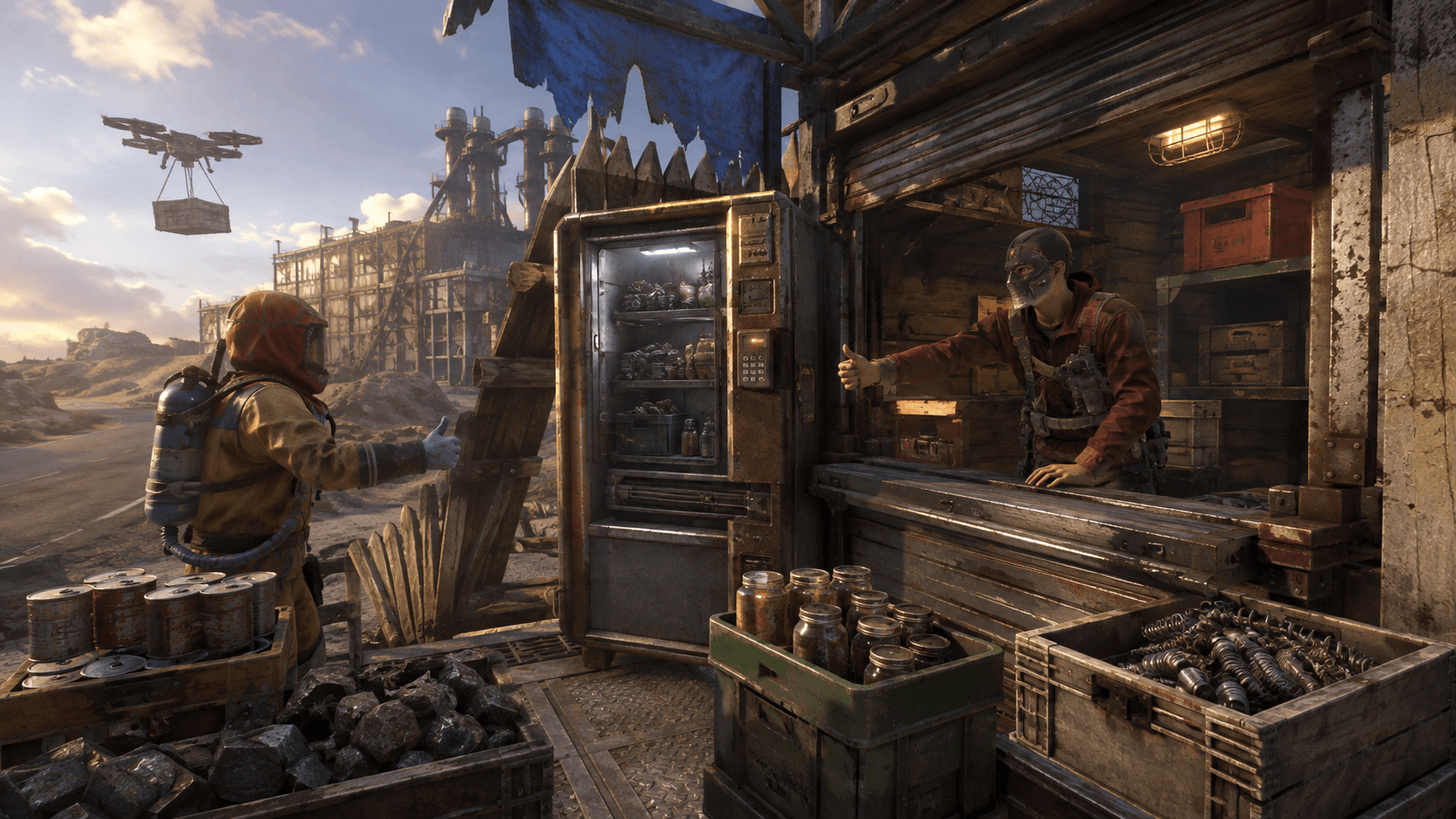
Components are a convenient currency. At the beginning of a wipe, bodies, springs, and gears are valuable because teams accelerate research and fortify bases. Later, demand shifts to resources for battles and raids. Check the map and compare several vending machines before accepting the first price.
If you are selling yourself, do not list the entire reserve. Start with a small batch and observe the demand. Detailed settings for the shop and drone delivery are covered in the Rust trading guide.

Practical Storage System
- "Now" Box: components for current weapons, doors, or devices.
- "Reserve" Box: rare bodies, tech trash, and spring reserves.
- "Recycle" Box: excess to be sent on the next run.
- "Sell" Box: items whose price exceeds their usefulness for the team.
Labels save time for the whole group and reduce random losses. In an industrial base, conveyors can automatically sort items, but filters first check for cheap resources.
Components, Scrap, and Blueprints
Scrap is not just a regular building resource. It unlocks tech trees, pays for research, purchases, and some recipes. Therefore, evaluate the result of recycling not only in numbers: a few dozen scrap can complete the necessary path or may lie useless next to a component that will have to be searched for again tomorrow.
The research table is suitable when you already have a specific item and need its blueprint. The tech tree provides a predictable path but requires payment for intermediate nodes. Before spending, open the tree and calculate the full route. If the item is sold cheaply, buying and directly researching sometimes save a large amount of scrap.
Physical blueprints are also used by the industrial crafter. Do not automatically discard them if you plan to automate. Separate the character's knowledge from the blueprint item: a learned recipe allows manual crafting, while an automated line may require a separate carrier.
Recycling Route by Wipe Stages
In the first hours, the priority is metal, cloth, and scrap for basic protection. Recycle obvious excess but leave gears for doors, springs and bodies for weapons. In the middle of the wipe, the list defines specialization: a builder stores mechanisms, a farmer — tarps and sewing kits, a raider — pipes and tech trash.
Later, the value of a full box decreases if the components are not used. Turn the stock into combat kits, electricity, trade goods, or scrap. Before completing the cycle, there is no point in keeping resources "for later." It is better to realize them in the current goal and gain experience with the recipe.
Final Algorithm
Each time, ask three questions: is the component needed in the next few hours, how difficult is it to find a replacement, and what will recycling it right now give you. If the detail opens a door, weapon, protection, or production — keep it. If the stock exceeds real plans — turn the excess into scrap and materials. If the market offers more — sell.
Consider the cycle duration in the wipe calendar and the rules of the selected server. Proper work with components not only frees up boxes but turns random road loot into a consistent development plan. After each major outing, review the reserve with the team. Set aside details for already selected recipes, move the trade batch to a separate section, and prepare a bag for the recycler. Do not make decisions hastily at the monument: a valuable spring easily turns into scrap, but the reverse exchange is almost always more expensive. The storage order should be clear even to a participant who returns after a break. Then rare finds work towards a common goal, rather than disappearing into a random recipe or recycling queue.


Latest comments