










Trading in Rust: shop, drones, and competitive prices
Trading in Rust allows you to turn surplus resources into weapons, blueprints, transportation, and time. Players don't necessarily have to progress through the entire tech tree on their own: a good shop can exchange mined sulfur for a needed door, components for tools, and farm goods for scrap. The security of the transaction is more important than a fancy storefront.
Why Trade
Each group develops differently. One player quickly mines ore, another controls monuments, a third builds a farm. Trading turns specialization into an advantage. Instead of risky searching for a rare component, you can sell an available resource and buy a ready-made item.
Trading is especially strong at the beginning of a wipe. At this time, tools, doors, weapons, and key components save hours. Later, there is an increased demand for sulfur, coal, cloth, fuel, medicine, and ready-made kits. The price depends on the day of the cycle, online presence, and product availability, so there is no fixed exchange rate.
Direct Player-to-Player Trading
Handing items from hand to hand is the fastest and most dangerous method. Meet in a safe zone or use a structure that prevents sides from getting close to each other. Do not bring your entire stock and do not disclose the location of your main base. Even an honest deal can attract a third player.
Agree on exact quantities, quality, and condition of the item in advance. Weapons with low durability, empty fuel tanks, or nearly used-up maps may be worth less than a full item. Inspect the goods before final confirmation and do not fall for the request to "put your part first" in an open area.
Wooden Trading Showcase
The wooden showcase is made from available resources and is suitable for early trading. It physically separates players but poorly protects the room and does not provide full automatic transaction confirmation. Use it only for cheap goods and temporary points.
Do not place the showcase in a wall behind which the main crates are located. Create a separate airlock with its own door and empty space. If the buyer or their partner starts breaking the structure, the loss should not open the way to the core of the base.
Metal Trading Showcase
The metal showcase is stronger and provides a secure exchange interface. Both sides see the offered items and confirm the operation. This is a good option for a pre-agreed deal when drone delivery is unavailable or the buyer wants to check the item's condition.
The external participant still remains vulnerable to an ambush, and the window shows part of the interior. Build a neutral trading compartment, do not open the internal door during the meeting, and control the roof. After an expensive deal, leave through different routes.
Vending Machine
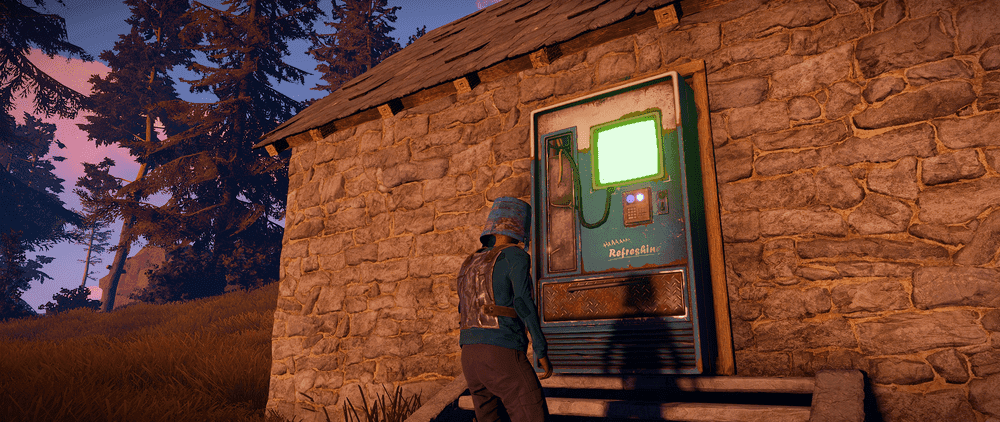
The vending machine creates buy and sell orders without the owner's presence. In the current version, quality metal and gears are needed for crafting, and the device itself is installed in the doorway with the appropriate side. The back panel is for management and should be inside a secure room.
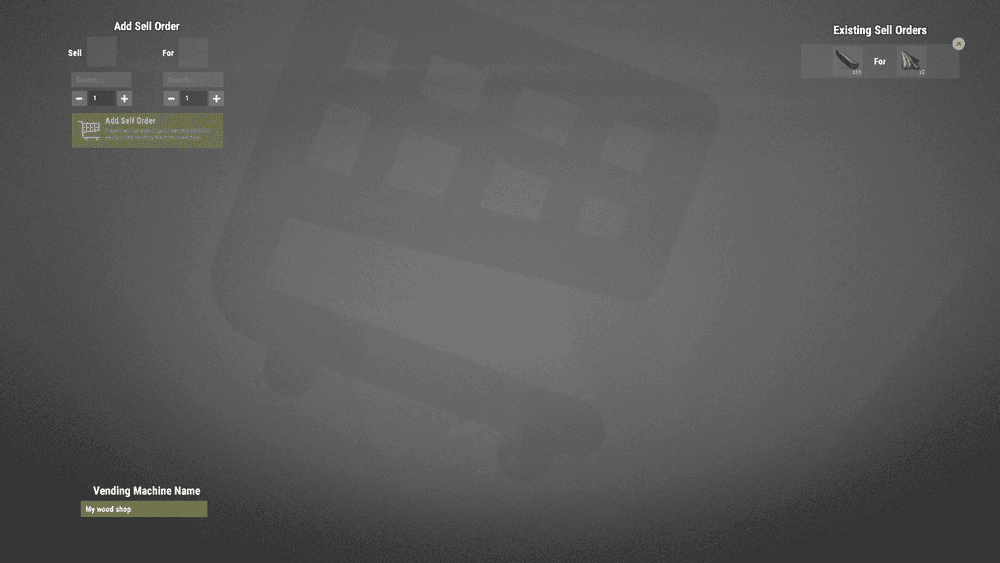
In the admin menu, create an offer: what item and quantity are given, what item and quantity are accepted. Then load the stock of items for sale and leave space for payment. If the inventory is full, the machine will not be able to accept new resources.
Do not confuse the showcase assortment with storage. Only a reasonable batch should be inside. A raider who gains access to the back side can manage the contents, and destroying the device poses a risk of losing part of the goods. Keep the main stock deeper and replenish the store with small amounts.
Displaying the Store on the Map or Not
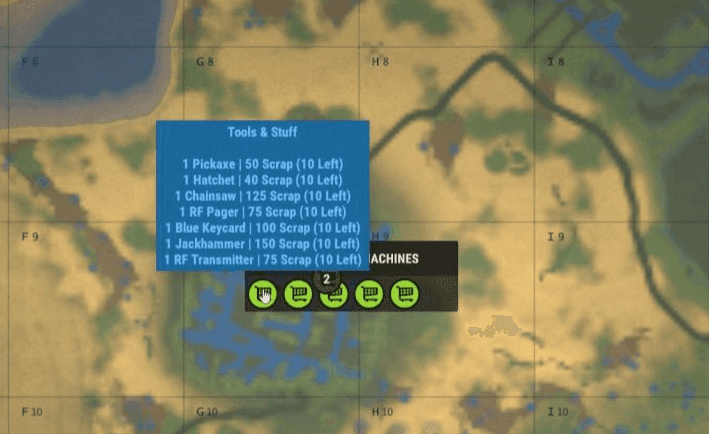
Transmission makes the machine visible on the game map and shows active offers. This attracts buyers and allows for delivery, but at the same time reveals the area of the base. For hidden trading with allies, you can disable the transmission. For public business, choose a separate store that does not reveal the exact location of the main house.
The name of the trading point should explain the assortment without provocations and unnecessary promises. Place several profitable positions so that players have a reason to fly across the map. An empty or constantly unavailable machine loses trust.
Purchasing via Market Terminal
Market terminals are located in large safe zones. Through the terminal map, select an available vending machine, review the offer, and confirm the order. The system adds a delivery cost with scrap and sends a secure trading drone. The time depends on the route; retrieve the arrived items before the access to the cell expires.
Delivery reduces the risk of ambush near someone else's base and allows comparing prices across the island. It does not turn a bad price into a good one: consider the commission, quantity of goods, and the value of your time. Sometimes the nearest offer is more profitable than a cheap store at the other end of the map.
The machine should be in a position accessible to the market drone. If it is covered by a roof or placed inconveniently, a remote order may be unavailable. After construction, check your store through the terminal, and do not wait for the first buyer's complaint.
Rented Stores
Modern Rust updates have added rented trading spaces in residential monuments. A player pays the initial cost and rental time, then manages the assortment like in a regular machine. Such points attract a natural flow of visitors but operate under separate rules and do not always support drone delivery.
Do not leave a long-term reserve in a rented store. Monitor the payment time and conditions for changing ownership. If the trading point closes, retrieve the remaining items within the game's specified period. This is an addition to a secure home store, not a replacement for the main base.
Setting Prices
Compare the usefulness of items at the current moment, not just their names. On the first day, a sheet metal door may cost more than its production cost because it immediately secures the base. Towards the end of the wipe, ready-made weapons sometimes decrease in price, while raid resources increase in value.
| Factor | How It Affects |
|---|---|
| Wipe Day | Early items and blueprints are particularly valuable at the start |
| Online Presence | High demand speeds up sales but increases risk |
| Rarity | Scarce components and items receive a markup |
| Delivery | Commission changes the final order cost |
| Volume | A large batch may sell cheaper per unit |
| Location | A convenient and safe store saves the buyer's time |
Observe competitors' offers on the map, but do not automatically copy the minimum price. A competitor may have one bait without stock. Start with a small batch, measure the sales speed, and adjust the rate.
Profitable Items to Sell
- Tools. Picks, axes, and drills are needed by beginners.
- Building Items. Doors, garage mechanisms, and locks save time for buyers.
- Weapons and Ammo. High demand combined with high storage risk.
- Components. Springs, pipes, gears, and bodies help overcome the technological barrier.
- Medicine and Cloth. Useful constantly, especially for active groups.
- Berries and Teas. A farm base turns harvest into repeatable goods.
- Fuel and Vehicle Parts. Convenient near roads and garages.
It is convenient to plan the stock composition according to the component guide. Enhancement recipes are found in the mixing table guide, and the demand of vehicle owners helps understand the car guide.
What to Buy for a Newcomer
A purchase is justified if the item immediately reduces risk or opens up a profitable route. A metal door strengthens the base, a tool speeds up mining, a weapon protects the exit, and an access card leads to better loot. Do not spend all your scrap on a prestigious gun without ammo, healing, and a spare kit.
The order of initial development is described in the beginner's guide. If buying maps, study the routes of the green and blue keycards in advance, or else an expensive pass will remain lying in a box.
Store Protection
- Separate the trading area from the residential core.
- Position the vending machine's back panel inward.
- Block the path with multiple doors and a separate cupboard if the layout allows.
- Do not store all payment in the machine - regularly move it.
- Install external surveillance, lighting, and alarms.
- Do not create a blind spot where a buyer can be easily killed: reputation affects traffic.
- Check the roof and foundation after reconstruction.
Automation of lights and alarms is described in the electricity guide. Remember that overly conspicuous protection also informs raiders of the store's value.
Typical Seller Mistakes
- Load all stock and leave the back panel accessible.
- Do not leave space for accepted items.
- Sell a single cheap item with unprofitable delivery.
- Place the store close to the main base core.
- Ignore price changes during the wipe.
- Promise an assortment that is constantly unavailable.
- Meet every buyer with a weapon at the terminal and lose trust.
Inventory and Profit Tracking
Record the initial stock, received payment, and replenishment cost. Without tracking, a filled crate creates a sense of profit, although you may have exchanged rare components for less than their real utility. For a simple store, a table is sufficient: item, cost price, selling price, quantity sold, and remaining stock.
Separate the turnover and team's personal resources. If members constantly take scrap from the trading crate for research, it is impossible to understand the result. First, return the batch cost, then distribute the profit. Unsold items also have a price: they take up secure space and can be lost in a raid.
Check the store after balance changes and server rules. A new recipe can sharply increase demand for an old component, while a more accessible loot source can crash the price. Quick adjustment is more profitable than trying to maintain the old rate for weeks.
Trading Point Reputation
Players return to where the offer matches the map, the machine is accessible, and the area is not turned into a constant ambush. Reputation is not displayed on a separate scale but quickly spreads through chat and neighbors. An honest store gets repeat purchases and direct supply offers.
Do not use the main trading entrance as an exit for a combat group. The buyer should not guess if the open door is the start of an attack. Spread routes, leave an illuminated area, and do not direct open turrets at a safe waiting point. Store protection should stop raiders, not automatically kill every customer.
If you have agreed on a large supply, confirm the time and exact quantity in advance. Divide the trade into multiple operations and verify each one. A constant supplier of resources is often more valuable than a one-time deal with a maximum markup.
Trading Strategy for a Wipe
At the beginning, sell items that speed up the start. In the middle of the cycle, expand the assortment with components, weapons, and infrastructure. Closer to the end, focus on combat consumables and resources. Check the dates in the wipe calendar: items that won't sell are better used by yourself.
On the project servers, consider the multipliers and rules of the specific mode. The easier a resource is to obtain, the weaker its purchasing power. Start with a single secure machine and a few clear offers. When sales become regular, expand the warehouse, add delivery, and create a separate recognizable trading point.

Latest comments